Church Going
A serious house on serious earth it is, In whose blent air all our compulsions meet, Are recognised, and robed as destinies. - Philip Larkin

When I was a child, my Dad used to take the family out for picnics and walks in the country. We used to drive to a village somewhere in Wiltshire, Somerset or Gloucestershire, park in a village car park or next to the local pub, and most of the time, we would drop in to see if the local church was open. If it was, we’d take a look inside and say a prayer. Sometimes it wasn’t, which was a cue for some low-level irritation about how churches should be kept open. My family are Catholic, so there’s always been a half-joke there about how the Anglicans ‘stole’ our churches. (Yes, it is more complicated than that!).
On other occasions we went to places with standing stones (Avebury, Stanton Drew), longbarrows (West Kennet, Stoney Littleton), to visit chalkhill figures (of which there are many in Wiltshire). Sometimes an Iron Age hillfort or a ruined abbey might be thrown in too. We went for numerous picnics at Old Sarum, a special place my father (who is from Salisbury) had often visited with his parents. Once or twice we even went as far as the Dorset coast; we remember a very rainy trip to Lulworth Cove one summer, and a sunnier visit to Chesil Beach where - to my continuing embarrassment - I fell in the sea and got soaked. Almost all our outings revolved around places which were free to visit though. There just wasn’t the money to pay for entry fees, but how lucky we were to have all this for free.
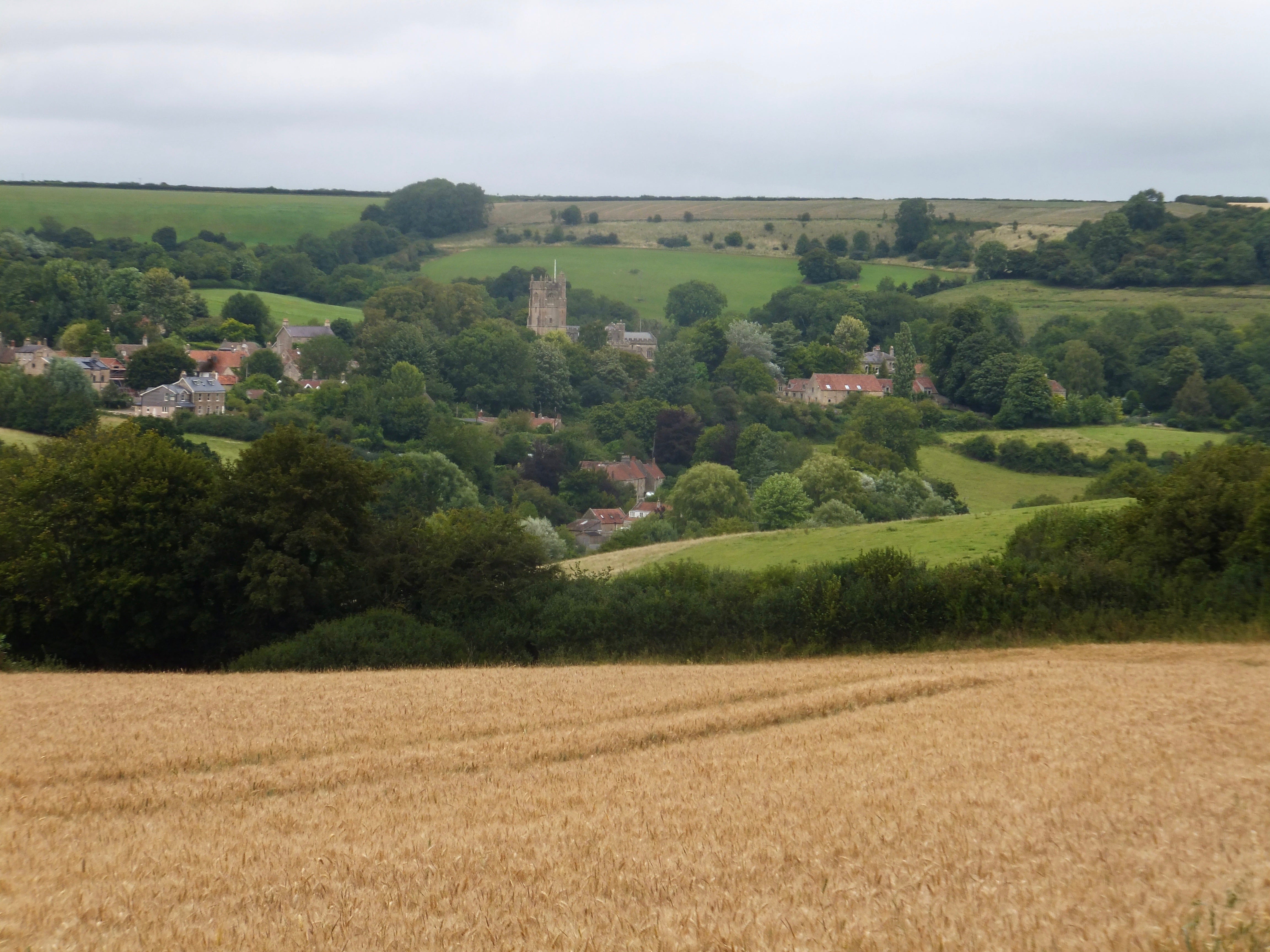
My family have kept up this tradition of outings, although these days we are less able to do them together. In recent years my husband and I have added to the list of places to explore as we moved away from London, first to Berkshire and later to Devon. In adulthood I’ve thought about how this link with the heritage of our country has shaped me and provided a sense of rootedness. As you grow older, you carry on old traditions and make new ones.
I’m interested in architecture and we have recently invested in some of the Pevsner guides, but I don’t know enough about architecture to describe what I am seeing very well or explain why it is significant. As a Christian, however, I do understand the shape of religious buildings themselves, how liturgies unfurl there, and the purpose behind many of their features - the font, the lectern, the altar. Then there are the different ways that the buildings tell stories, from the people buried in the graveyard, to the names on brass plaques on the walls, to the stained glass windows, which feature images of saints, apostles, scenes from the life of Christ, stories from the Old Testament (stained glass windows are often dedicated to parishioners as well). Stained glass can be admired purely as art too - the local church acts like a tiny gallery of applied art in many an British village or hamlet, from its stained glass, to its sculptures, to the stitched banners, altar cloths and kneelers.
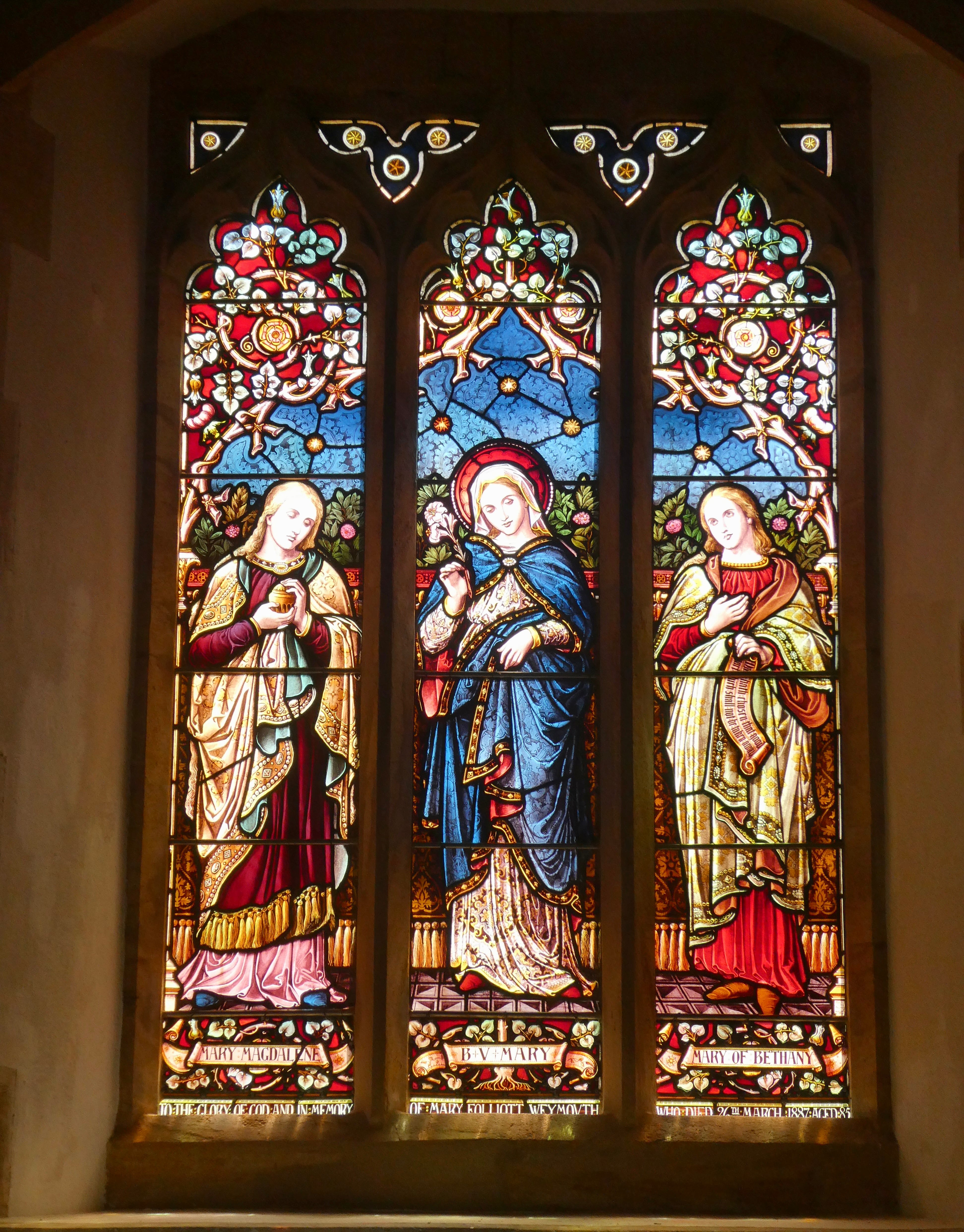
We have visited a few different churches* so far this year, but there were a couple whose stories really stood out.
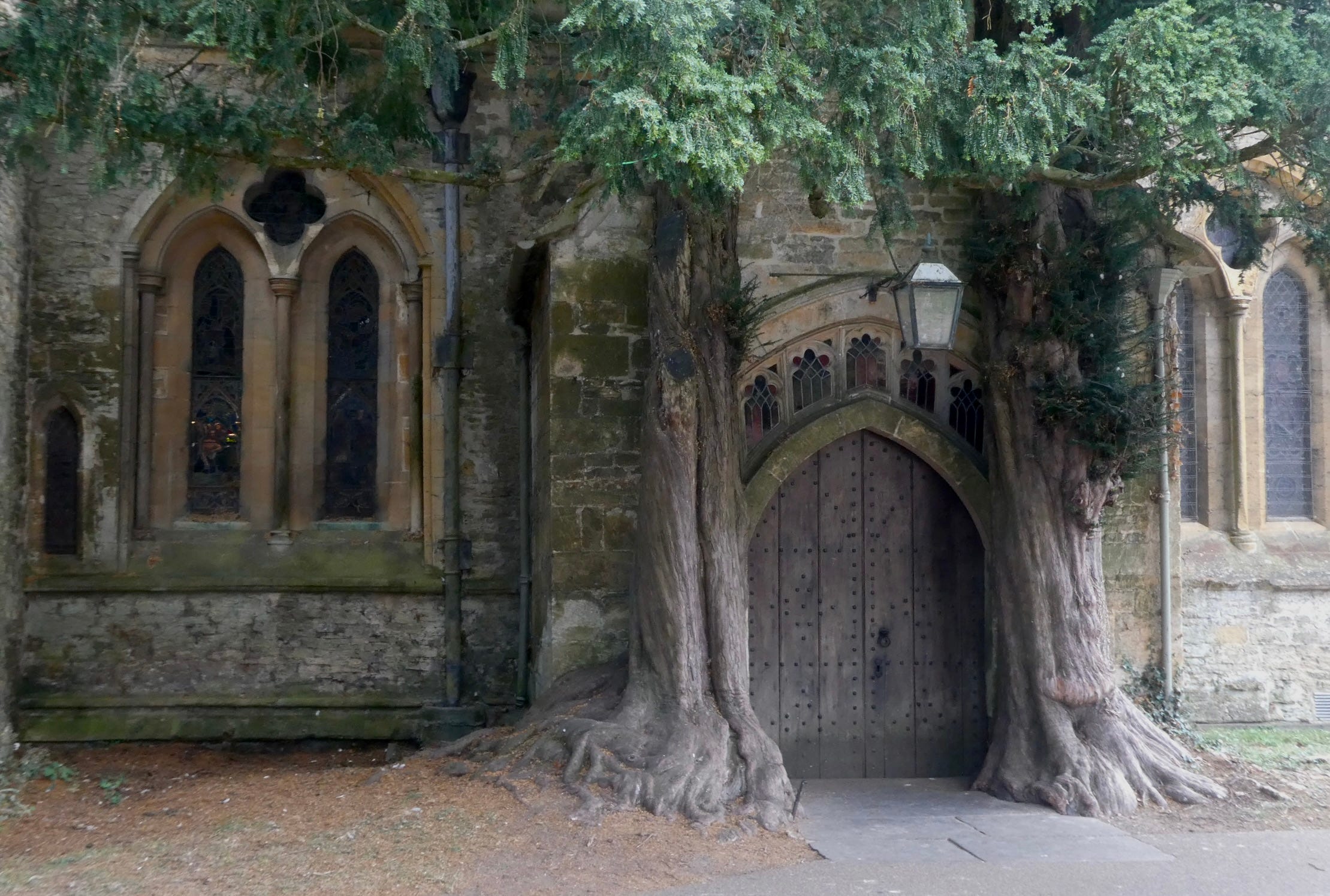
In August we visited Stow-on-the-Wold, where the church of St Edward has become extremely popular with tourists and content-creators because it was said that JRR Tolkien’s ‘Doors of Durin’ were inspired by the north door of the church. The way in which the yew trees grow around the door certainly lends it a magical quality, at least to a generation brought up on the writings (and later film and television adaptations) of the Inklings. There’s no direct evidence that I have been able to find of this Tolkien connection, but that has not stopped a procession of people visiting to have their photo taken with the door and in front of the door.
It is not improbable that Tolkien did visit the church, but as any literary historian would agree, that fact alone does not mean that the doorway, however magical-looking, provided his main or sole inspiration. In a sense, it does not really matter if Tolkien drew inspiration visiting a particular place or not - this tenuous literary connection helps the local economy, a lot of tourists go away with a nice picture, and it is indeed a jolly nice door.


What struck me, however, was that some of these people weren’t going into the church itself, even though if Tolkien did visit it, I’m sure he would have gone in and doubtless prayed there. They were missing out on the glorious stained glass lit up by the afternoon sun, but also missing out on exploring another important inspiration for Tolkien - the influene of Christian religious culture on European history.
Towards the end of the summer, in pursuit of further tenuous literary connections, we decided to visit Buckfastleigh. Buckfast Abbey, still home to a community of Benedictine monks, has many layers of history dating back to medieval times, although the present building is much more modern. In the twentieth century it became quite famous for its tonic, and also its bees (thanks to Brother Adam, a famous apiarist who once met my father in the 1960s).
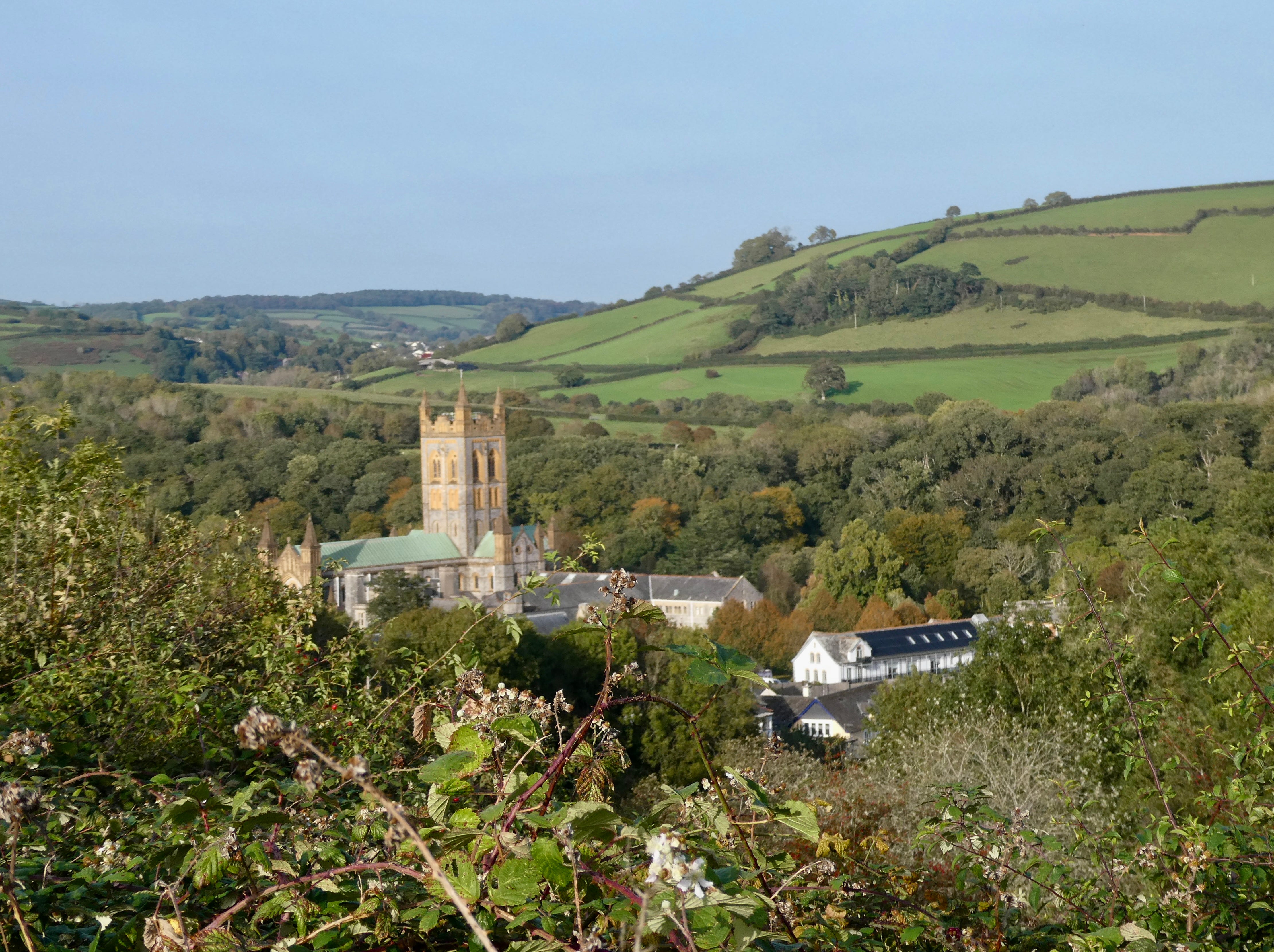
Buckfastleigh has the unusual, although not unique, claim to fame of having an Anglican church which is much more modern than the local Catholic church. There are several churches in Buckfastleigh besides the Abbey: St Benedict’s, the small Catholic church in Buckfastleigh which is really a chapel of the Abbey; St Luke’s, a small Anglican church built in the 1990s and designed by Ron Weeks (the architect of Clifton Cathedral, my home parish church - coincidentally Ron was also a friend of my father’s); a Methodist chapel which is on the Abbey grounds and Holy Trinity, a ruined church on a hill above the town.
Archaelogical evidence shows that there was a church on the site of Holy Trinity in Anglo-Saxon times, at the summit of a very steep hill. By the late 19th century a church (St Luke’s) had been built closer to the centre of the town, presumably because the parishioners were getting fed up of regularly climbing up a very steep hill). In the early 1990s, when a fire ravaged Holy Trinity Church, a decision was made to rebuild St Luke’s, hence the modern building in the centre of Buckfastleigh you can see today.
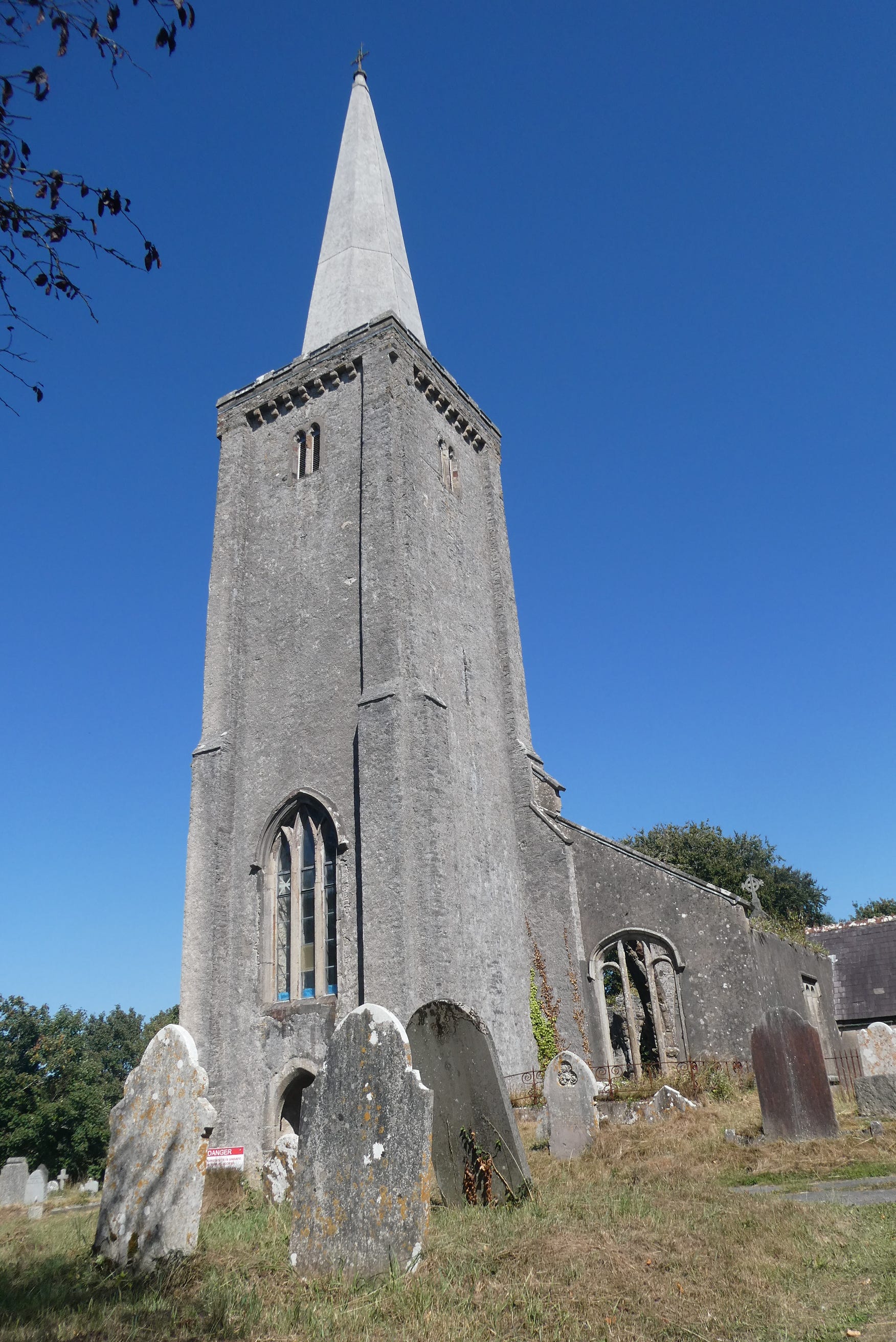
I was vaguely aware of Holy Trinity Church from a previous visit to Buckfastleigh, not least because the tall spire is visible from somewhere in the surrounding area, and also because we had passed a sign next to some steep steps which said ‘this way to the church’ or similar, but I hadn’t realised its rather curious history until something about it cropped up on my social media. It is famous for being home to the tomb of Richard Cabell, a local squire, who was part of the inspiration for Sir Arthur Conan Doyle’s The Hound of the Baskervilles (Conan Doyle lived in Plymouth, and wrote about Dartmoor, so his Devon connections are pretty well-known). The legend is that Richard Cabell was buried under a heavy stone and with iron bars covering the tomb ‘to prevent his coming up and haunting the neighbourhood’.
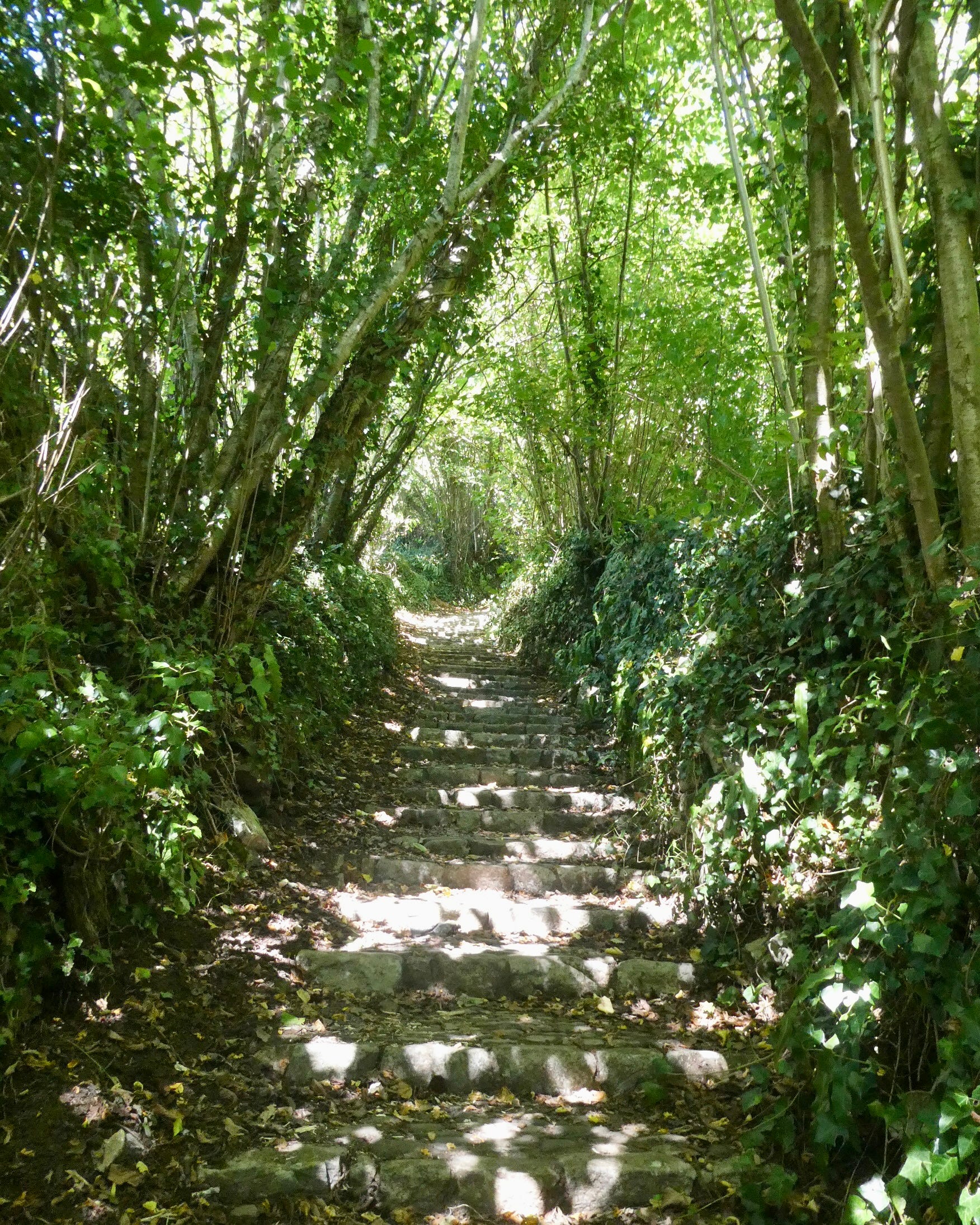
We found the church by ascending some steep steps and then walking up a narrow, wooded footpath to the summit of the hill, or what might more accurately be termed a rocky outcrop. The place felt pretty deserted, although there were a few vehicles parked nearby. Some stern signs tell you that it is not safe to enter the church, although I have to admit, we did take the minor risk of wandering in to take some photos. I am not very prone to superstition, but I was glad it was a very hot, sunny day with bright blue skies, because otherwise the deserted, ruined church with legends connected to it of fiends and black dogs breathing fire might have spooked me a little.


I read a little more about the history of the church when I returned home. There were rumours that the church had been set alight by Satanists. This is unproven, although it was treated by the police as arson, and there are fairly persistent rumours in Devon and Cornwall of such things. Regardless of who started the fire, or why, the local people lost this important focal point for village life, a connection to the history of their community going back generations. As a Christian, I felt sadness looking at the blank spot where the altar would stand (the architectural features are perfectly visible, if the furnishings are not), seeing the carved names of people on some of the stone slabs on the floor, even glancing around at the graveyard - which is still being looked after by the local community. Regardless of the facts, the place did feel eerie.


From the top left (clockwise): St George’s (Dawlish), St Philip and St James (Norton St Philip), St Michael’s Mount Dinham (Exeter), St Pancras (Widecombe-in-the-Moor).
A visit to a church can provide a focal point to a walk because so often a church is a focal point in a village - visually, with its tall tower or spire, socially, with its procession of weddings, funerals, Remembrance Sundays, baptisms, Harvest Festivals and Christmas carol services, and culturally, because churches are still places where arts and culture flourish in many different ways. The history of these churches, from the grandest cathedrals in the land to smaller churches in tucked away hamlets buried deep in the countryside, is made by their people, by their memories, and by the way the buildings hold meaning. This is also true of ruined churches. Even the most tenuous of literary, or ‘uncanny’ connections add yet another layer of meaning and become part of the history of a place. ‘Yet stop I did: in fact I often do,’ as a much better writer than me once said, and I will continue to do so.
*If you are interested in Devon churches, I recommend Devon Churchland (also on social media.)
Acknowledgements:
Particular thanks to Ben for humouring me in my search for tenuous literary connections and also for agreeing to walk up some very steep steps to visit a ruined church in a heatwave. Also thanks to my father, for the outings and for everything else.
Things to spot at the moment:
After an exceptionally dry summer in Devon, the last few weeks have seen a great deal of rain, and everything is looking very green again, but it does definitely feel like autumn.
Look out for autumn fruits in the hedgerows - hawthorn berries, sloes, rowan, sweet chestnuts and more.
The leaves are beginning to turn, but let’s see if we get the autumn some have promised.
It seems to be a good year for fungi. Popping up in lawns, leaf mould and woodland…!
Thank you for such a rich and thoughtful meander. A nourishing beginning to the week.