The Ancient Hills
Between the Moor and the Sea

When my grandmother, who died a few days before her ninety-sixth birthday, was in her later years, she used to look out of the window of her flat in Broomhill, Bristol and exclaim ‘the ancient hills! the ancient hills!’. I’ve never been sure what the phrase referred to - a poem she’d learned by rote as a child, or a hymn perhaps, but the phrase has stuck in my head ever since. She was referring, as it happens, to Dundry Hill and the edge of the Mendips, just visible from parts of Bristol. I grew up (like my grandmother) in a city, but the hills were always there in the distance, and I really missed this kind of landscape when I moved to London. It was one of the things I found immediately homely when we settled in Exeter.
The hills in question - if you live in Exeter - are the Haldon Hills, also referred to as ‘Haldon’. For five years we lived near the Exe, and from just outside our house, you could see the hills and the turreted folly of Haldon Belvedere in the distance, surrounded by forests. On the rare occasion when the rest of the country had snowy weather, the only bit of snow I could see was on these hills. The forests looked dark and mysterious from afar, but we didn’t visit them for many years because there was a pandemic on and we didn’t have a car. They were one of the first places we visited when my husband learned to drive.
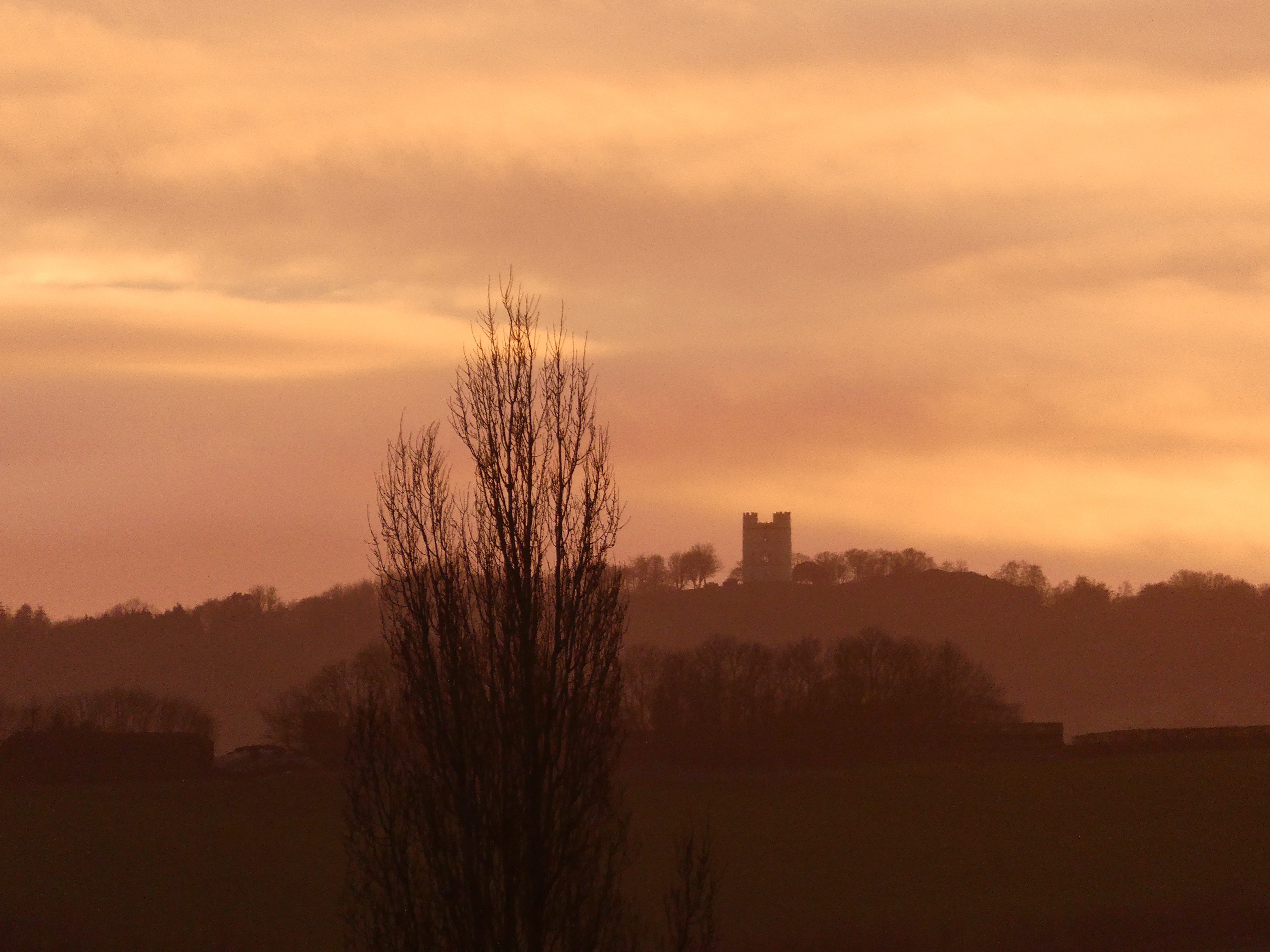
For most people who visit the West Country, Haldon is encountered, somewhat briefly but dramatically, as they journey along the A38 towards Torquay, the South Hams, Plymouth and Cornwall. The A38 splits at the base of Haldon, one part (A380) running up what is known as Telegraph Hill in the direction of Newton Abbot and Torquay, and the other half (A38) going up Haldon Hill towards Ashburton, Ivybridge, Plymouth and over the Tamar to Cornwall. On either side of the road are mysterious-looking coniferous forests: as your car climbs the hill you might be wrapped in fog, and there are warning signs which tell you that there might be wild animals crossing. The signs are there for a reason, as deer fairly regularly run across the dual carriageway, sometimes in groups. If you’re travelling back down Telegraph Hill, the fact you’re actually at a height is betrayed by the fact that your ears may pop and there is an escape lane in case of brake failure.
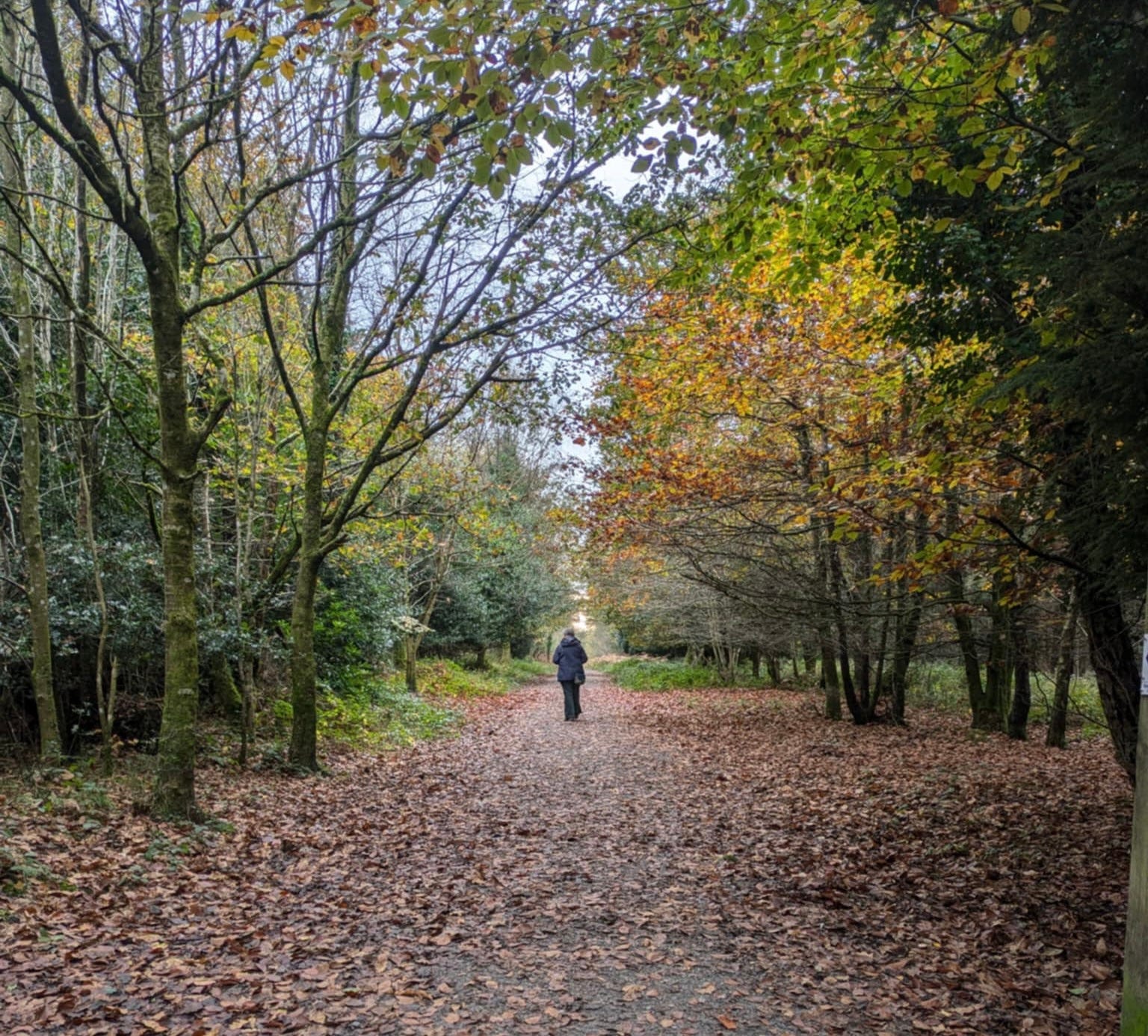
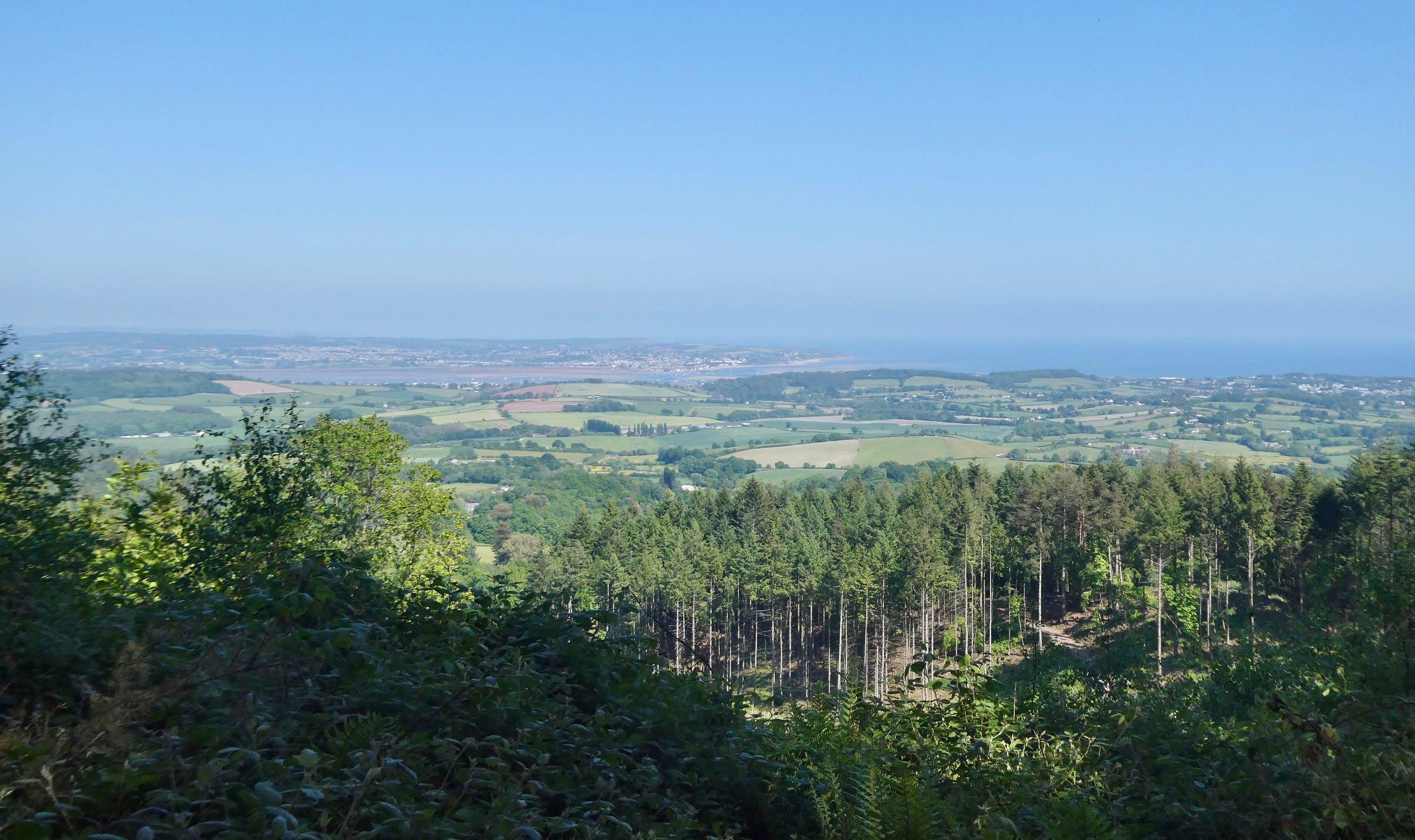
Unlike Dartmoor, and parts of the Devon seaside, these hills do not figure much in wider public consciousness, but are nevertheless very popular with locals as a place to explore. Haldon Forest Park has running and cycling trails, and the forest on both sides of the main road has many footpaths to enjoy. The views are spectacular, as the name ‘Belvedere’ suggests. A local historian, W G Hoskins, posited that the name Haldon derives from the Old English Haw-hyll dun meaning look-out hill, which makes a lot of sense given how far you can see. On a clear day, in one direction you can see the tors of Dartmoor, in the other you can see Exeter and beyond, the Exe Estuary and as far as the coast of East Devon. Incidentally, the Powderham estate also has its own Belvedere which can be viewed from the Exmouth side of the Exe Estuary.


As I get older, I get more interested in geology. Geology, as I’m beginning to understand, informs the landscape we experience, and the landscape informs our stories, our history. Geology underlies the ecology of a place: what plants grow and what wildlife inhabits a landscape, and how humans interact with it. Even with my novice understanding of geology, I noticed the flints which help form the surface of the hills, and looking across from Little Haldon, observed the deep valley carved by the course of Dawlish Water, which runs down to the sea in the town where we live.
The Haldon Hills are pretty significant in wildlife terms, with Haldon Forest providing a home for various birds of prey, nightjars, and rare butterflies. The conifers also provide a habitat for a fairly common but favourite bird of mine, goldcrests. Goldcrests (along with firecrests) are the smallest British birds, and the best way to identify their presence is note the tiniest movements in the treetops and an extremely high pitched twittering which matches their miniscule scale. The most recent autumn was a good one for spotting fungi, and this merited a trip to Mamhead to spot some in the forest…


Parts of the Forestry Commission sections of Haldon are a fairly barren monoculture: timber has been grown here since World War One, necessitating the planting of fast-growing conifers. However, the forests are still significant in ecological terms, and there are efforts being made to both protect and enhance the areas of lowland heath and broadleaf forest. Beeches love the chalky, flinty soil and there are also plenty of birches scattered here and there.


Among more unusual visitors to this area are pine martens. Reports in the local news indicated that part of the Two Moors project resulted in some of the released pine martens dispersing to the area around the Haldon Hills. Unfortunately, a small number of these elusive animals decided to make a break across the dual carriageway and were hit by cars, so the experts will be thinking up a solution to mitigate the effects of traffic on the small pine marten population.
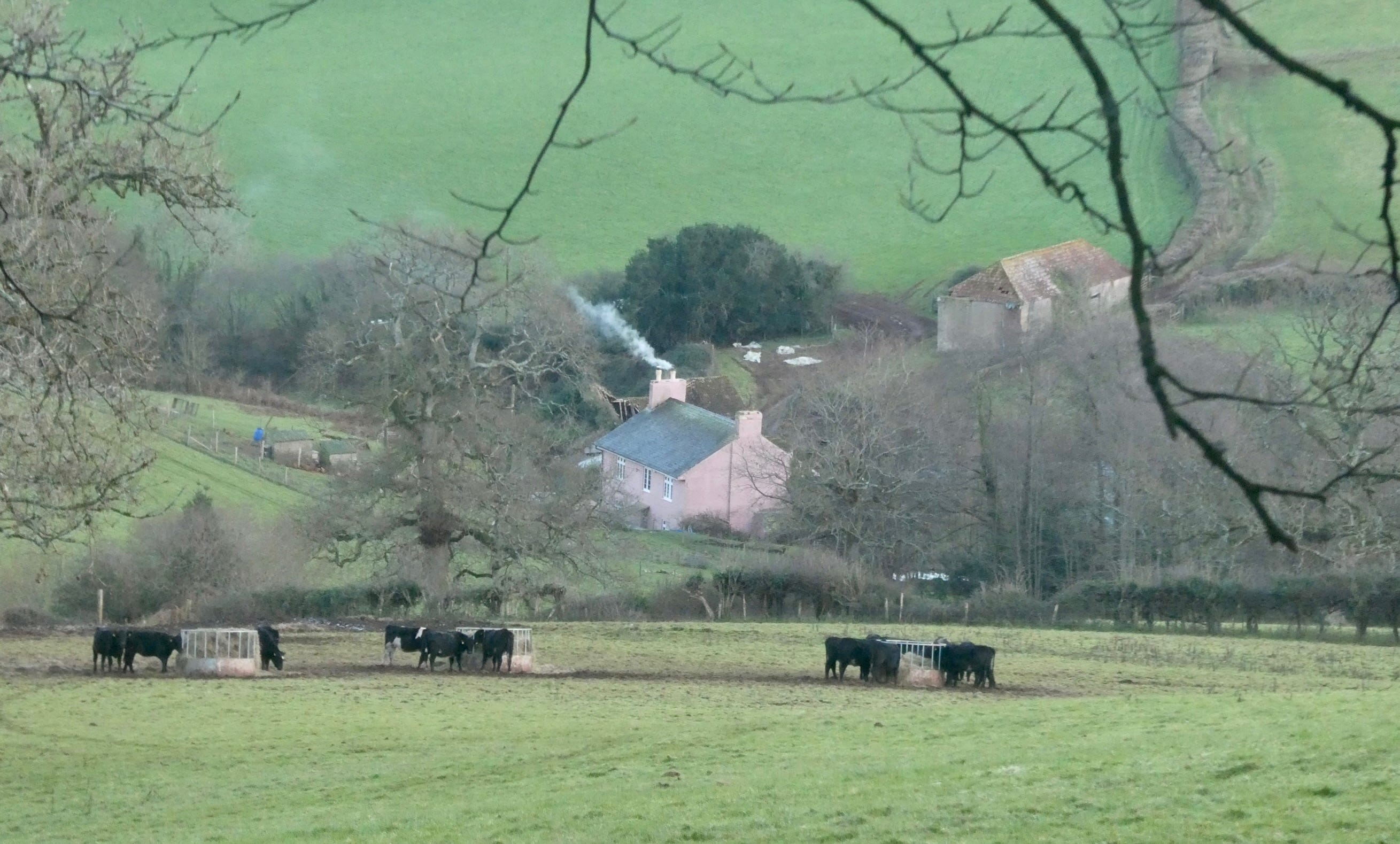
Numerous Bronze Age tumuli, an Iron Age square enclosure, and sunken medieval lanes show that there were people living in Haldon from the earliest times. On the hillside between Dawlish and Little Haldon sits Lidwell Chapel, which in the 14th century was used by the hermit Robert de Middlecote as a base for robbing and murdering travellers. We went to visit this chapel and found that it was difficult to get any access, surrounded by fences and completely overgrown. Only the cows from the local farm looked at us as we peered over the fence posts to get a closer look.
There remains in the human psyche a particular feeling that something dark, mysterious, or magical may be lurking in forests.* Indeed, Haldon features somewhere in the consciousness of local people as something of a wilderness. One Sunday, preaching about the New Testament prophet John the Baptist, our parish priest suggested that the local equivalent figure would be standing somewhere up in those hills shouting at people to repent because ‘the kingdom of heaven is at hand’. Many years ago, a character called Smokey Joe lived up on Telegraph Hill under a tarpaulin, where the locals brought him food and drink. A sense that you could get lost in those woods, or that they are a place where various types of skullduggery and misdemeanour take place, remains, even if there is no longer an evil hermit robbing passing travellers.
One day in midwinter, we bowed to an impulse to walk all the way from our house in Dawlish to the highest point at Mamhead. In many ways it was a completely pointless walk, given that we have driven up to that same spot many times, and it took several hours. But as we walked up the winding country lanes between tall hedges, pausing only to lean on a fence overlooking some farmland to drink tea from a flask, we had a great sense of satisfaction that we had uncovered another bit of the landscape around the place we now call home, and yet there would be more to explore another day. With so many trails left to walk, we will probably never quite get bored of those hills.
Hills provide a glorious sense of perspective on the ups and downs of our lives. I think my grandmother liked to quote those words because she knew that the hills had been there before she was born, and would be there after she died, part of our shared history.
* Inter alia Dunchideock, in Haldon, is said to be home to one of the UK’s fictitious treaclemines.
Absolutely beautiful piece of nature writing. The bit about pine martens dispersing to Haldon from the Two Moors project is fascinating and heartbreaking in equal measure. Your observation about geology underlying ecology and history feels like one of those connections thats obvious once you see it but easy to miss otherwise. Grew up near some hills in Pennsylvania with simialr vibes and can confirm that sense of something old watching back never quite fades.